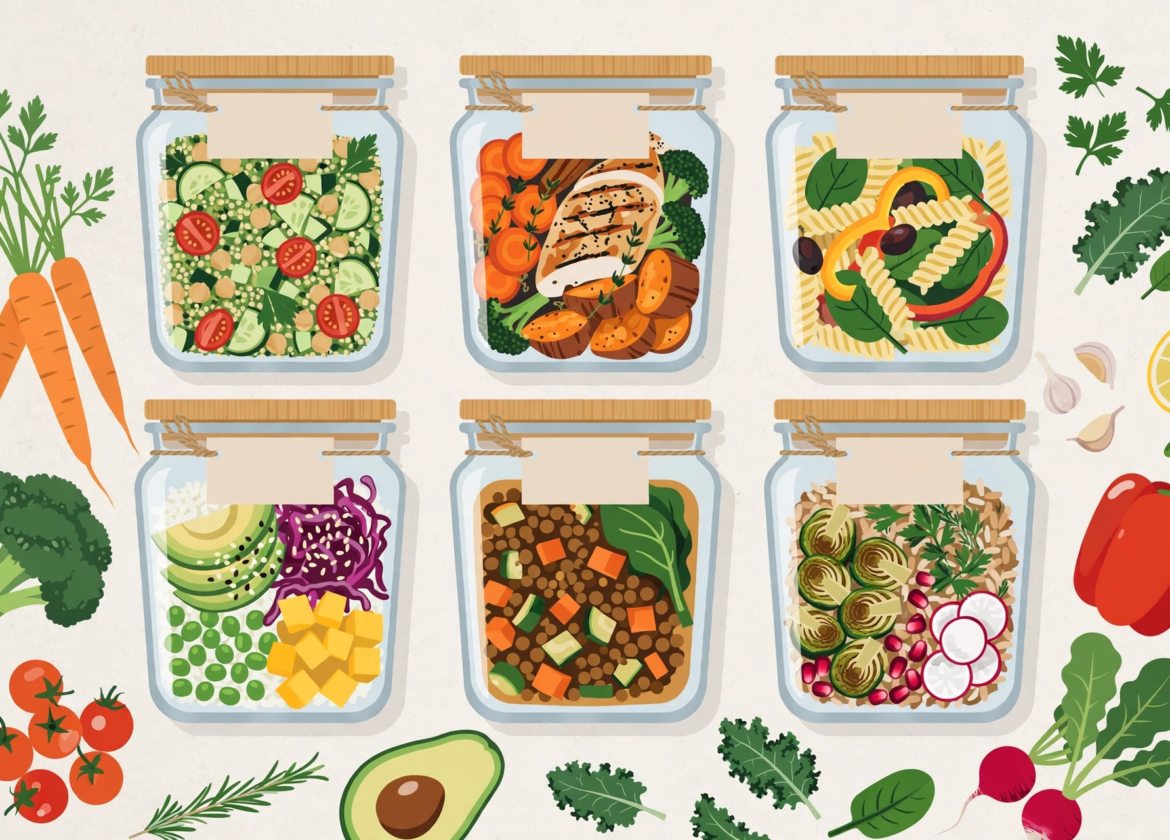
Meal prep means cooking food in advance so you have ready meals during the week. It sounds like a lot of work, but when done simply, it actually saves time, money, and stress. Instead of deciding what to eat every day and cooking from scratch each evening, you cook once or twice a week and enjoy easy meals on busy days.
This guide explains meal prep in simple steps for beginners. You do not need fancy containers or complicated recipes. You just need a plan, a few basic foods, and about one to two hours on a quiet day, such as Sunday.
Why Meal Prep Helps
First, it saves time. Cooking five separate dinners takes much longer than cooking a few large batches at once. During the week, you only need to reheat and serve.
Second, it saves money. When you plan meals, you buy only what you need, and you waste less food. You are also less likely to order expensive takeaway when you are tired.
Third, it helps you eat better. When healthy food is already ready in the fridge, you are more likely to eat it. When you have no plan, it is easy to skip meals or eat only snacks.
Meal prep does not mean eating the same meal every day. With a few base foods, you can mix and match to make different meals all week.
Step 1: Plan Your Week (15 Minutes)
Before you shop or cook, make a simple plan. Ask yourself:
- How many meals do I need? For example, 5 lunches and 5 dinners.
- What do I already have at home? Check rice, pasta, lentils, canned foods, and frozen vegetables.
- What simple meals do I enjoy? Choose meals you already know how to cook.
Write a short list. For example:
- Monday lunch: Rice, chickpeas, and salad
- Monday dinner: Pasta with vegetables
- Tuesday lunch: Leftover pasta, reheated
- Tuesday dinner: Rice, chicken, and spinach
You do not need a perfect plan. A rough plan is much better than no plan. Start with 3 to 4 meals and repeat them if needed. As you get more confident, you can add variety.
Step 2: Shop With a List
Once you have a plan, make a shopping list grouped by type: grains, protein, vegetables, fruit, and pantry items. Shopping with a list stops impulse buying and ensures you do not forget key ingredients.
Good meal prep staples include:
- Grains: rice, pasta, oats, bread, tortillas
- Protein: eggs, chicken, chickpeas, lentils, beans, yoghurt
- Vegetables: onions, carrots, spinach, tomatoes, frozen mixed vegetables
- Flavour: garlic, ginger, soy sauce, herbs, spices, lemon, cooking oil
These foods are affordable, last well, and can be used in many different meals.
Step 3: Cook in Batches (60 to 90 Minutes)
Choose a quiet time, put on some music, and cook two or three base foods in larger amounts. Here is a simple beginner batch:
Batch 1: Cooked Rice
Cook 3 to 4 cups of rice at once. Let it cool, then store it in containers. Cooked rice can be used for fried rice, rice bowls, wraps, and side dishes all week.
Batch 2: Roasted or Cooked Vegetables
Chop carrots, onions, and other vegetables, toss with oil and salt, and roast in the oven, or cook them in a pan until soft. Roasted vegetables can be added to rice, pasta, wraps, and salads.
Batch 3: A Protein
Cook a simple protein in a large batch, such as boiled eggs, chickpeas with spices, or chicken pieces cooked in a pan with herbs. Protein keeps you full and makes meals satisfying.
You do not need to cook full meals in advance. Cooking base foods is often easier and more flexible, because you can combine them differently each day.
Step 4: Store Food Safely
Safe storage is very important in meal prep. Here are simple rules for beginners:
- Cool food quickly before putting it in the fridge. Do not leave cooked food at room temperature for more than 2 hours.
- Use clean, airtight containers. Glass or good-quality plastic containers both work.
- Label containers with the day you cooked the food, if it helps you remember.
- Eat refrigerated cooked meals within 3 to 4 days. If you cook on Sunday, plan to eat those meals by Wednesday or Thursday. For later in the week, use frozen meals.
- Freeze extra portions in single servings. Frozen rice, cooked chicken, and soups freeze well. Thaw them in the fridge overnight before eating.
When reheating, heat food until it is hot all the way through, not just warm on the outside. Stir soups and rice while reheating so heat spreads evenly.
A Simple Example Week
Here is how one batch can become many meals:
Sunday batch: Rice, roasted vegetables, chickpeas with cumin, boiled eggs.
- Monday lunch: Rice bowl with vegetables and chickpeas.
- Monday dinner: Wrap with vegetables, chickpeas, and yoghurt.
- Tuesday lunch: Fried rice with egg and leftover vegetables.
- Tuesday dinner: Rice with chickpeas and salad.
- Wednesday lunch: Pasta with roasted vegetables (cook pasta fresh, it takes 10 minutes).
- Wednesday dinner: Leftover rice bowl with egg.
Notice that you are not cooking a completely new meal each time. You are reusing base foods in new combinations, which saves time and keeps meals interesting.
Tips to Keep Meal Prep Easy
Start small. Prep for 3 days first, not a full week. Once that feels easy, expand to 5 days.
Keep sauces and toppings separate. A meal can taste completely different with a new sauce. For example, rice and chicken taste different with soy sauce, with yoghurt and lemon, or with tomato sauce.
Do not prep food you do not enjoy. Meal prep only works if you actually want to eat the food you prepared. Choose foods you like.
Clean as you go. Wash pots and chopping boards while food cooks. At the end, your kitchen will be clean, and you will feel more motivated to prep again next week.
Common Beginner Mistakes
One mistake is cooking too much complicated food at once. Start with simple foods you already know. Complexity can come later.
Another mistake is forgetting food safety. If food has been in the fridge for more than 4 days and you are unsure, it is safer to throw it away. When in doubt, freeze food earlier rather than later.
A third mistake is making every meal identical. If you eat the exact same lunch for five days, you will get bored. Use different sauces, toppings, and combinations to keep meals enjoyable.
Conclusion
Meal prep for the week does not have to be difficult or time-consuming. Plan a few simple meals, shop with a list, cook base foods in batches, store them safely, and mix and match during the week.
Start this Sunday with just rice, vegetables, and one protein. See how much time you save during the week, and how much easier mealtimes feel. With a little practice, meal prep will become a simple habit that saves you time, money, and daily stress.