Cooking for the first time can feel intimidating. Recipes use words you may not know, pans get hot quickly, and it is easy to worry about making a mistake. The truth is, every good cook started as a beginner. Cooking is a skill, and like any skill, it improves with simple habits and a little practice.
This post shares practical cooking tips every beginner should know. They are not complicated techniques. They are the small habits that make cooking safer, easier, and more enjoyable — and that help your food taste better from the very first meal.
1. Read the Recipe Fully Before You Start
This is the most important beginner tip. Before you turn on the heat, read the recipe from start to finish. Check the ingredients, the equipment you need, and the cooking time.
Reading first helps you notice steps like “marinate for 30 minutes” or “preheat the oven” that need to be done early. It also helps you avoid the stressful moment of realising, halfway through cooking, that you are missing a key ingredient.
If a recipe uses a word you do not know, look it up quickly before you start. A minute of reading can save a ruined meal.
2. Prepare Everything Before Cooking
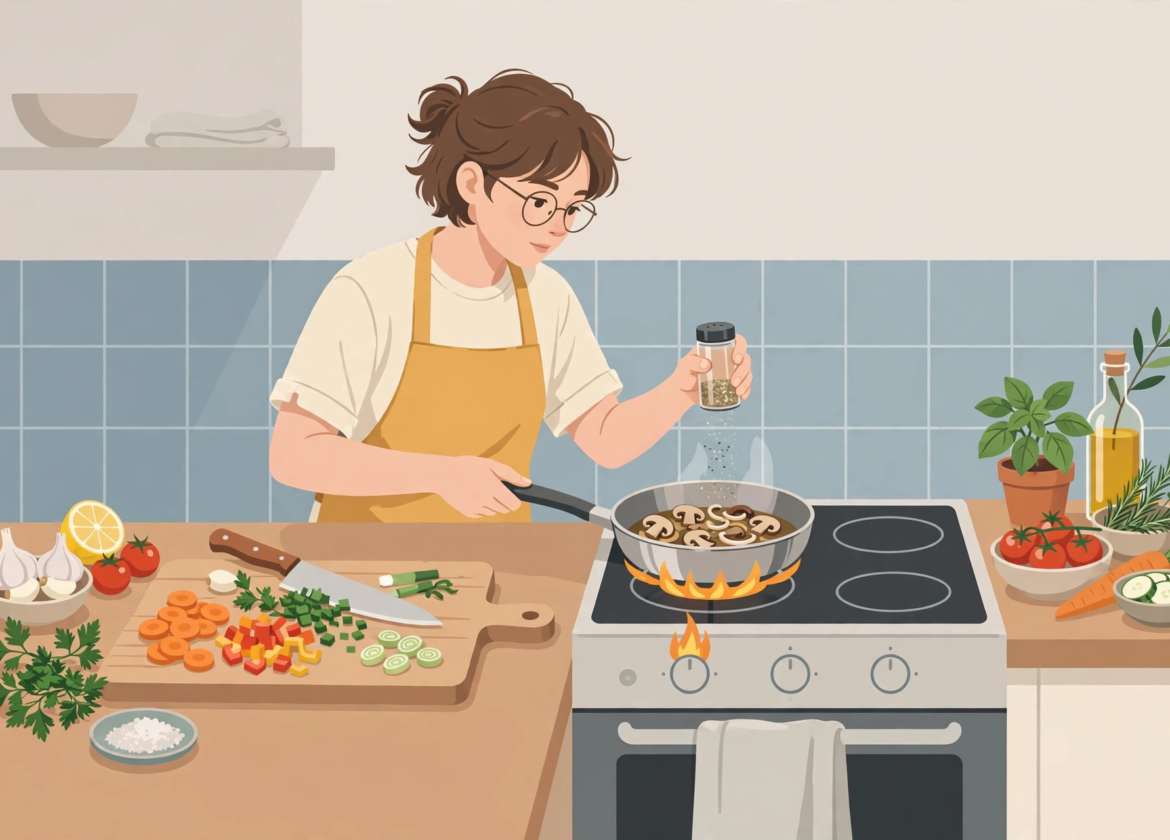
Professional cooks call this “mise en place,” which means “everything in its place.” Before cooking, chop vegetables, measure spices, open cans, and place everything near the stove.
This habit makes cooking much calmer. You will not be rushing to chop an onion while garlic burns in the pan. It also helps you check that you have everything you need before you begin.
For beginners, preparation is more important than speed. Take your time to prepare, and cooking itself will feel much easier.
3. Learn to Control Heat
Heat control is the secret to good cooking. Many beginners cook on very high heat because they think it will be faster, but high heat often burns food on the outside while leaving the inside raw.
Here is a simple guide:
- Low heat: For melting butter, warming sauces, and cooking eggs gently.
- Medium heat: For most everyday cooking, such as frying onions, cooking pasta sauce, and making pancakes.
- Medium-high heat: For searing meat or boiling water quickly, with close attention.
- High heat: Only for short tasks, such as boiling water or stir-frying quickly, while stirring constantly.
When in doubt, use medium heat. You can always increase heat later, but you cannot easily fix burnt food.
4. Season Gradually and Taste Often
Seasoning means adding salt, pepper, herbs, and spices to make food taste good. Beginners often make two mistakes: adding no seasoning, or adding too much at once.
The solution is to season a little at a time and taste often. Add a pinch of salt, stir, taste, and then decide if you need more. The same rule applies to chilli, lemon juice, and sugar. Small adjustments are easy. Fixing over-seasoned food is difficult.
Remember that different ingredients add salt, such as soy sauce, cheese, and stock cubes. Taste before adding extra salt if your recipe already includes these.
5. Knife Safety Basics
You do not need expensive knives to cook well, but you do need to use them safely. Here are basic rules:
- Use a sharp knife. A dull knife is actually more dangerous because it slips instead of cutting cleanly.
- Curl your fingers when holding food, like a claw, so your fingertips are away from the blade.
- Cut away from your body, not towards it.
- Keep knives dry and store them safely, not loose in a drawer where you might cut yourself reaching in.
- Never try to catch a falling knife. Step back and let it fall.
Take your time when chopping. Speed comes with practice. Safe, slow cuts are much better than fast, risky ones.
6. Do Not Overcrowd the Pan
When you put too much food in a pan at once, the temperature drops, and food steams instead of frying. Vegetables become soggy, and meat does not brown properly.
If you are cooking a large amount, cook in two batches. It takes a few extra minutes, but the result is much better. Leave space between pieces of food so heat can circulate.
This tip is especially important for fried rice, roasted vegetables, and pan-fried chicken. A crowded pan is one of the most common reasons beginner dishes turn out soft instead of golden.
7. Let Meat Rest and Let Sauces Thicken
After cooking meat, let it rest for a few minutes before cutting it. Resting allows juices to spread evenly through the meat, so it stays moist instead of drying out. For a small chicken breast, 5 minutes is enough.
Similarly, after cooking pasta or a sauce, let it rest for 1 to 2 minutes off the heat. Sauces thicken slightly as they cool, and pasta absorbs a little extra flavour. Rushing to serve immediately can mean a thin sauce and less flavour.
Patience at the end of cooking often makes the biggest difference to taste.
8. Clean As You Go
Cooking creates mess, but cleaning as you go makes the whole experience better. While rice cooks or vegetables roast, wash a chopping board, wipe the counter, or put away ingredients you have finished using.
At the end of cooking, you will have only a few dishes left, instead of a huge pile. This makes cooking feel less stressful, and you will be more likely to cook again tomorrow.
Keep a small bowl on the counter for peelings and waste while you cook. It is faster than walking to the bin many times, and it keeps your workspace tidy.
9. Learn a Few Flexible Recipes Well
Instead of trying a completely new recipe every day, learn a few flexible recipes really well. Good beginner recipes to master include fried rice, tomato pasta, vegetable soup, omelette, and one-pot pasta.
Once you know these well, you can change them easily. Add different vegetables to fried rice, change the sauce on pasta, or add cheese to an omelette. Mastering a few recipes builds confidence much faster than cooking twenty different recipes once each.
10. It Is Okay to Make Mistakes
Every beginner burns toast, overcooks pasta, or adds too much salt at least once. That is part of learning. Do not let one mistake stop you from cooking again.
When something goes wrong, ask what happened. Was the heat too high? Did you forget to stir? Did you add seasoning too quickly? Understanding the mistake helps you avoid it next time.
Cooking should be enjoyable, not perfect. A simple home-cooked meal, even if it is not restaurant-perfect, is still a success. Celebrate it, learn from it, and try again.
Conclusion
Cooking well as a beginner is not about fancy equipment or difficult techniques. It is about reading recipes fully, preparing ingredients first, controlling heat, seasoning gradually, using knives safely, not overcrowding the pan, letting food rest, cleaning as you go, and mastering a few recipes.
Follow these tips, practise regularly, and be patient with yourself. In a few weeks, cooking will feel less stressful and much more fun — and your food will taste better with every meal you make.